11/12/26
Best of the West: Critical minerals investment; Major mental health expansion; Monarch butterfly tracking; Crater Lake’s native newts; and regenerative agriculture in Colorado
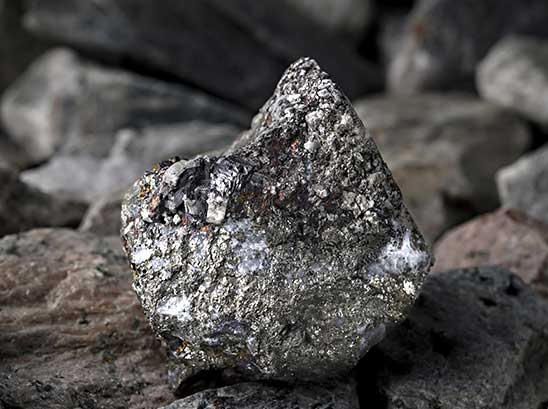
The Western Governors' Association keeps you updated on the latest news in the West. Here are the top stories for the week starting November 9, 2026. (Photos courtesy of Adobe Stock Images).
Securing a domestic supply chain of critical minerals has been talked about for years, but there have been several announcements in recent weeks that indicate significant progress.
The U.S. Department of Energy (DOE) recently announced a new competition offering up to $70 million to expand America's mining and critical minerals workforce. This prize competition is part of DOE’s broader $100 million Providing Opportunities for Specialized Education in Critical Technologies (PROSPECT) initiative, which seeks to secure long-term economic growth, rebuild domestic supply chains, and reduce reliance on foreign adversaries for critical minerals.
As part of this funding, the DOE selected 16 universities to receive $16 million through the Providing Opportunities for Specialized Education in Critical Technologies (PROSPECT) Planning Prize, nine of which are in the West.
The selected western universities are Colorado School of Mines, Montana Technological University, New Mexico Institute of Mining and Technology, South Dakota School of Mines and Technology, the University of Texas at El Paso, the University of Utah, the University of Alaska Fairbanks, the University of Arizona, and the University of Nevada, Reno.
This follows a $29.5 million investment that DOE made at the end of September to fund 17 projects at national laboratories in nine states.
The Bureau of Land Management also introduced its new Critical Minerals Screening Tool, an interactive tool that will help accelerate the responsible development of critical minerals resources on public lands.
But it's not just at the federal level. Western states have also made headlines for the critical minerals projects taking shape throughout the region.
Colorado School of Mines is partnering with DOE’s National Laboratory of the Rockies to build a new research facility to accelerate energy materials innovations from laboratory research to market-ready products and processes.
Nearby in Louisville, Colorado, Infleqtion, a company that specializes in quantum computing and quantum sensing technology, announced plans to field-test a new quantum gravity gradiometry system to improve subsurface mapping and help identify promising domestic critical-mineral resources.
A new extraction technique known as hydrometallurgical processing is also being deployed at the Eureka deposit in Alaska, the largest nickel deposit in the United States. Hydrometallurgical processing uses liquid-based chemical reactions to separate and recover valuable metals from mineral concentrates, potentially allowing companies to extract multiple critical minerals from a single deposit.
In Nevada, the Bureau of Land Management approved the Bullion Hill Underground Exploration Project, a gold and silver exploration project near Crescent Valley. The project is expected to employ up to 130 workers over six years of construction and exploration.
In Idaho, Sidney Resources Corporation announced a multi-stage $222.7 million development program for its Warren Mining District assets that will, over the next five years, expand production from 50 tons per day (TPD) to 450 TPD and create hundreds of jobs.
Further south, the Utah Division of Forestry, Fire, and State Lands (FFSL) has selected Mariana Minerals to lead the redevelopment and phased restart of mineral extraction at the former US Magnesium site on the southwest shore of the Great Salt Lake.
“Acquiring these assets and selecting an operator that is prepared to reinvest in this site is a significant win for the state and the lake,” Governor Spencer Cox said. “We are replacing a legacy polluter with an operator that will bring new technology to mineral extraction that is protective of the lake and its valuable water resources, and generate significant revenue that can be used to clean up this Superfund site rather than passing the costs onto taxpayers.”
A recent review found that Nevada, Arizona, Idaho, and Utah are home to at least eight long-idled mines that have restarted, entered restart construction, or announced reopening plans.
Major Mental Health Expansion: The University of Utah received a $35 million donation from the Larry H. Miller & Gail Miller Family Foundation for a new 185,000-square-foot research facility that will bring together scientists, clinicians, and experts in AI, public policy, business, and law to speed discoveries from the lab to patients.
Tracking monarch butterfly migration: Scientists are using tiny, solar-powered radio tags to track nearly 1,750 monarch butterflies and identify important stopover sites along their migration routes. The research has already revealed previously undocumented connections between eastern and western monarch populations, including a butterfly detected traveling from Utah to central Mexico.
Protecting Crater Lake’s native newts: Southern Oregon University students are working with the National Park Service and Oregon Zoo to help restore the Mazama newt, an amphibian found only in Crater Lake. After surveys found no newts at monitored sites in summer 2026, researchers are studying potential reintroduction habitat, managing invasive signal crayfish, and supporting captive breeding efforts.
Washington honors Jimi Hendrix on innovation coin: Washington Governor Bob Ferguson selected Jimi Hendrix, who was born in Seattle, to represent the state in the U.S. Mint’s American Innovation $1 Coin Program, which recognizes innovators from all 50 states and U.S. territories. Hendrix was chosen for his groundbreaking influence on electric guitar, and Washington’s coin is scheduled for release in 2029 following design development and federal review.
Regenerative agriculture in Colorado: The U.S. Department of Agriculture’s Natural Resources Conservation Service is expanding its Regenerative Pilot Program in Colorado by adding soil carbon amendments and range planting to the conservation practices eligible for funding in fiscal year 2027. The program offers financial and technical assistance to farmers and ranchers implementing whole-farm conservation plans to improve soil health, water quality, and agricultural resilience.